|
 Wheels - Winter Tires Wheels - Winter Tires
| Even with electronics more important than ever |
Since the winters in large areas of Central Europe have been somewhat milder and there have been many electronic aids (e.g. ABS), many drivers feel that they can do without winter tyres. The electronics also depend on
good contact between the tires and the road. And in the event of an accident, thrift could take revenge, as you may be asked to pay, also if you are not directly to blame. Fines are now even possible for driving with summer
tires in ice and snow. Some - including public transport companies - make do with 'all-season tires', unfortunately only a compromise.
| Wide tires with comparatively little contact area |
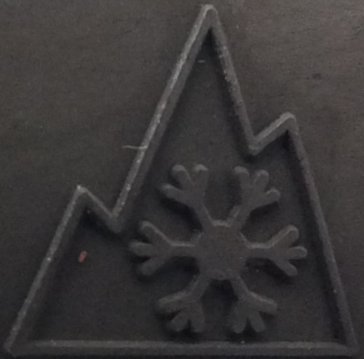
If one speaks of winter tires (symbol above in the picture), then one used to assume a large negative profile and strong transverse profiling. In the meantime, that has changed. Summer tires also have a negative profile (all
indentations in the treads) for reasons of aquaplaning. A little less crosswise, but all the more lengthwise. The wider the tire, the more negative profile there is, up to an area of over 20%. It seems like the footprint is about the
same for narrow and wide tires. This is also because it is shorter due to the usually smaller cross-sectional area and the resulting harder flank.
| Different rubber compound, fine and coarse profiling |
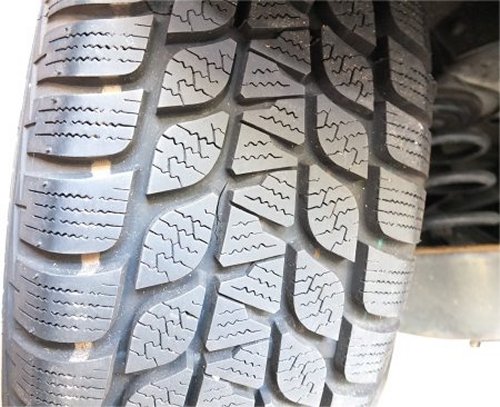
Winter tires are characterized by a different rubber compound with a higher proportion of silicates and natural rubber. They make the tires softer and, in contrast to summer tires, generate good grip even at lower
temperatures. This is why winter tires wear out so quickly in summer use. Almost more important are small, lamellar transverse grooves that can open and close and should be as deep as possible and across the entire tire
width. Due to the fact that they can be changed, snow cannot stay in them and thus clog the tyres. When temperatures drop, there is a turning point at which winter tires are superior to summer tires even on dry roads. At 50
km/h on snow, a winter tire has about half the braking distance. Nevertheless, one should not overestimate the traction capacity through risky driving.
| Winter tires are almost more important for all-wheel drive vehicles |
Forgo the last ounce of top speed with winter tires. Suitable winter tires are already losing some of theirs again good properties due to the compromise in the direction of high speed. Take the opportunity to be able to drive
(M+S) tires with a lower speed limit with a corresponding warning on the speedometer. Winter tires are particularly important for four-wheel drive vehicles. Because here the tires pretend to have traction when starting, which
they cannot maintain when braking. Worse still, since all-wheel drive makes the vehicle heavier, braking characteristics are generally even slightly worse.
| Only up to 4 mm tread depth, maximum 10 years |
The minimum tread depth for winter tires is not only 4 mm when approaching Alpine passes. You should change them with less profile and not continue to drive in summer, because the driving characteristics deteriorate at
higher temperatures. Of course, winter tires make absolutely no sense only on the drive axle, think about steerability and safety when cornering. By the way, there are already tire companies that guarantee the properties of
their winter tires for 10 years. However, do not assume from the date of purchase, but from the four-digit DOT number (week, year).
|
|