Hydraulic Brake - Drum Brake Hydraulic Brake - Drum Brake
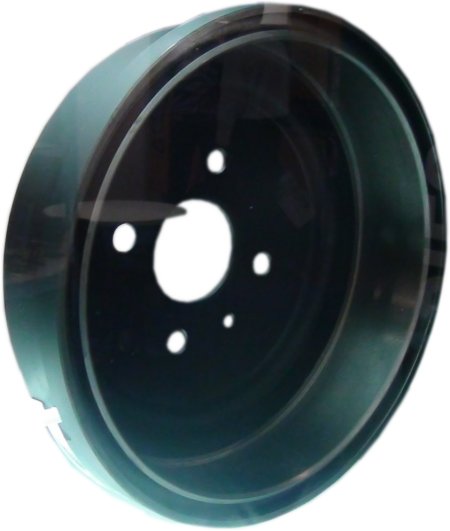
Drum brakes, are there still any at all except at the truck? Wrong question, because even with trucks, they are already on the decline. But of course, there are still, as you can see for example above on the ring for the
ABS sensor, in small, inexpensive cars and in conjunction with overrun brakes on the trailer. And then as a parking brake inside the rear disc brake (picture below).
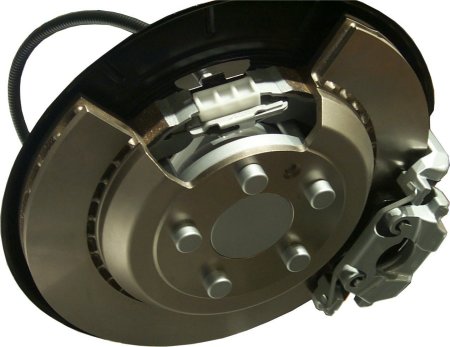
It clearly shows the main advantage in addition to the lower costs, namely the built-in self-amplification. So if the brake shoes are spread, that creates a primary and a secondary brake shoe,
depending on the direction of travel. Thus, if the drum or disc rotates counterclockwise at the top, then the left one is the primary one and the right one the secondary.
In the primary brake shoe, the rear end of the lining is pressed in the running direction, in the secondary brake shoe the front. If you now would have a small iron wedge, which brake shoe would produce more of a
clamping effect, the brake shoe with increasing gap or decreasing? Of course, at decreasing.
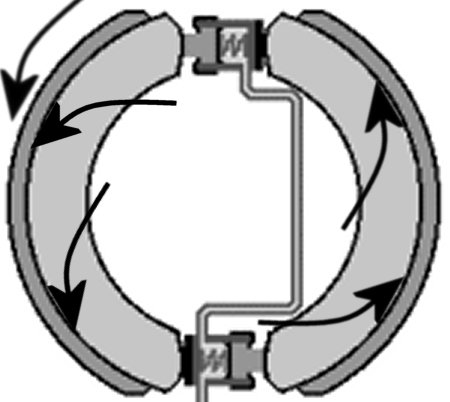
Once again the picture is enlarged, which you already saw in the chapter about the single-circuit brake. They are called 'duplex brakes' because of the two single-acting wheel brake cylinders. The pistons must extend
in the direction of the drum, here again counterclockwise. So reaches a point on the drum first the spreading mechanism and then the pivot point, so it is an primary brake shoe.
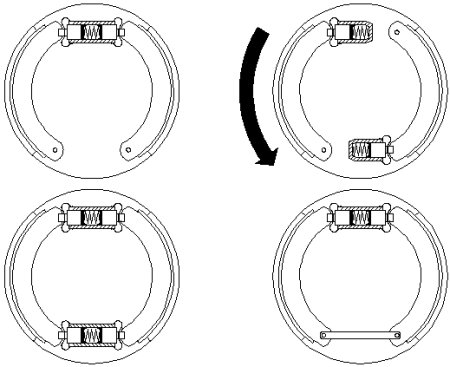
Once again all four possibilities are gathered here, above 'Simplex' and 'Duplex' below 'Duo Duplex' and 'Duo Servo'. While Duplex only strengthens in one direction (see arrow), the two below do in both, the duo servo
through the tab connection without a vertex with the least effort.

This is a simplex drum brake from practice. It can only be installed at the rear because of its poor heat behavior. There, however, it is very well suited for the parking brake due to the self-strengthening effect. The
handbrake cable is hung between the lower left opening and the lower right end of the expansion lever. This brake is adjusted on the connecting rod, which usually works automatically.

The picture introduces a very simplified explanation of the automatic adjustment mechanism. Whenever the handbrake is released, the small triangles could be pressed with step-like bevels a little deeper into the
actually two-piece connecting rod with enough play and these lengths. Modern adjustments already work with thermocouples, which prevent a possible only due to excessive heating adjustment..
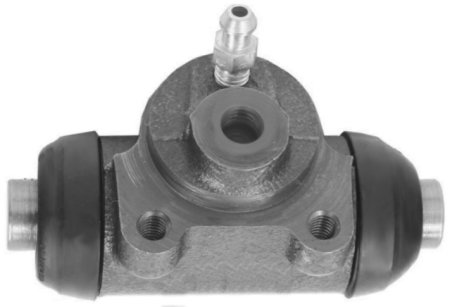
Finally, a note on the disassembly of drum brakes. Always be sure to reset the brake before removing the drums. When you try to pull the drum off with a puller without reset, not only the drum is pulled of, but also the
complete brake shoes and half the wheel brake cylinder (picture above).

Powerful drum brakes in front on the Mercedes-Benz race car W 196 R from 1955.
|