|
| 
|
 BMW 2 - 1978 M1 (E 26) BMW 2 - 1978 M1 (E 26)
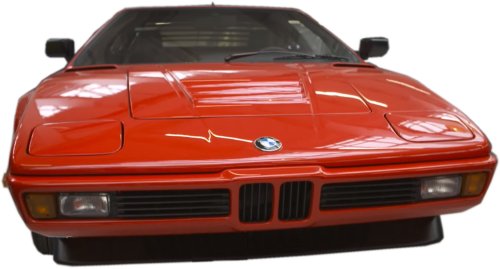
BMW M1 3.496 cm3 (93,4 * 84,0), 9,0 : 1, DOHC, 4V, mechanical petrol injection, dry sump lubrication, 330 Nm 5000 rpm, 204 kW (277 hp) 6500 rpm, 5-speed,
double wishbone, coil springs, disks ventilated, 10,0/23,5 x 16/12,5/25,0 x 16, 4,36/2,4/1,82/1,14 m, 300 litre, 116 liter, 1.300 kg, 250 km/h, 12V, 55 Ah, 910 W, 1978-1981 (399)
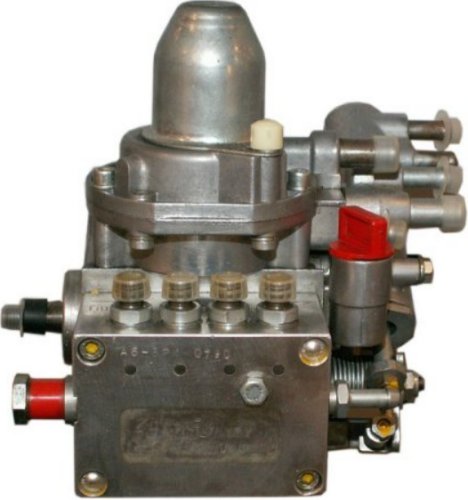
| Here the Kugelfischer injection with 'space cam', but for 4 cylinders |
Already in the chapter about the Turbo X1 we pointed out the differences in technology to the M1. Here it goes on like this, because the M1 was by no means a showpiece with limited utility value, but was the
result of concrete considerations.
It is said to have been an initiative by Bob A. Lutz, a member of BMW's board of directors, who brought Jochen Neerpasch to BMW in 1972. There were reasons for that, because up until then, he had
successfully raced for Ford in the Capri RS against BMW.
Neerpasch became chairman of the executive board of the newly founded BMW Motorsport GmbH. The first release was the lightweight 3.0 CSL coupe, developed in collaboration with Alpina. The next
project was intended to be a response to Porsche and possibly Ferrari.
kfz-tech.de/PBM8
Based on the Turbo X1, designed by Paul Bracq, who left the company in 1974 to join Peugeot, a Group 5 race car was to be developed under the direction of Martin Braungart, at the time not provided with the required
number of identical vehicles.
What BMW couldn't have known was that, starting in 1974, participation in Group 5 was made a prerequisite for Group 4, for which 400 vehicles would then presumably have had to be produced. But in any case,
the decision had already been made to build much larger numbers of vehicles.
However, the executive board's decision included a warning that BMW's mass production, which was in full swing at the time, must not be disrupted under any circumstances. At any rate, starting in 1975, the project was
given the green light.
kfz-tech.de/PBM5
In Italy, Ferruccio Lamborghini had just left his own company. It is not known whether the comparison between the relatively small amount spent on the purchase and the enormous amount spent on building a supercar
came from him.
That alone might have been a warning sign for BMW. In any case, the northern Italian automaker already seemed to be in serious trouble. BMW executives saw only an underutilized plant that could make their dreams of
production and race cars a reality.
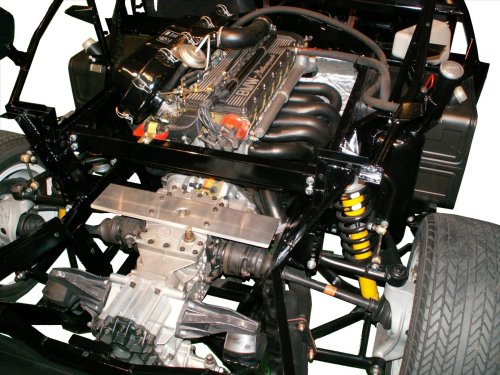
Until the very end, the Germans had “only” the engine left, the one component that was not only completed on time but also, under Paul Rosche’s guidance, lived up to its performance promises. As an inline-six, it later
proved suitable for other racing applications as well and was very successful.
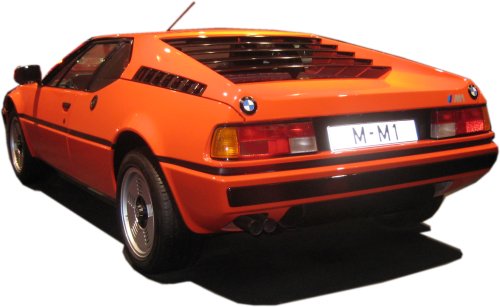
kfz-tech.de/PBM9
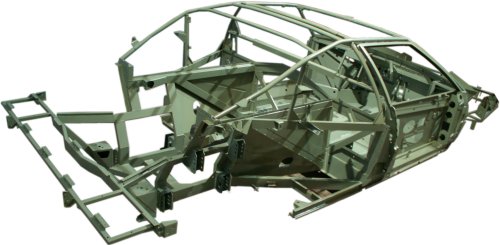
Redesigned, stripped of its gull-wing doors, and prepared for production, the vehicle was created by Giorgetto Giugiaro and his company, Italdesign, in Turin. The car is going into production with a lattice frame and
fiberglass body panels.
However, it's making only slow progress. It is now clear that 400 vehicles absolutely must be built in two years, an impossible task for Lamborghini, which has also taken on the project of developing a large SUV.
kfz-tech.de/PBM4
In 1978, Lamborghini came under government supervision, followed by its liquidation in 1980. BMW's response: The Italians watched as BMW employees took everything that was left for future M1s, along with the design
plans, back to Germany.
As usual, the space-frame was built by Marchesi, the fiberglass body by Transformationi Italiani Rimini, and the final assembly was carried out by Italdesign. A new addition was the Baur company from Stuttgart, which had
a hard time fixing the Italian workmanship and finishing the car.
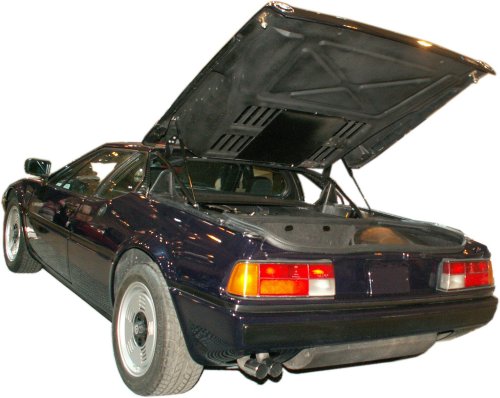
The car itself received good marks, with the exception of the excessive noise levels and handling characteristics that required some getting used to for the average driver once a certain level of lateral force was exceeded.
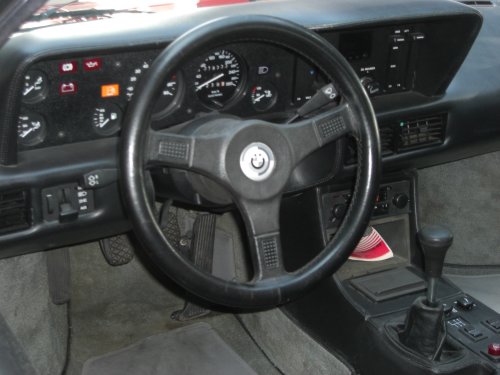
Naturally, these were typical phenomena for mid-engined sports cars and the 914/6, for example, also had the first gear in the lower left position.
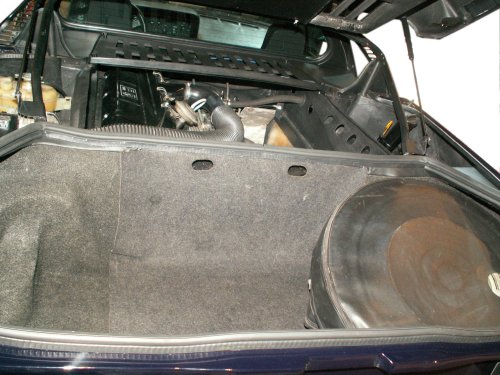
What was surprising for a project derived from racing was the ride comfort, something that is sorely lacking in today's very sporty vehicles. Another difference compared to the Turbo X1: Instead of torsion bars, coil springs
were installed up front. The front end therefore offered sufficient possibilities for support.
kfz-tech.de/PBM6
20 cm longer was the M1 with 16 cm more wheelbase. The longitudinally mounted straight six-cylinder made it necessary. Width and height were almost the same. It should weigh only 1,300 kg, despite 20
litres of coolant and two tanks with a total of 116 litres of fuel. Cars, which were driven at the possible performance limit, could 'guzzle up' to 20 litres/100km.
With 44 to 56 per cent the car was despite mid-mounted engine slightly tail-heavy. The top speed of 262 km/h showed the body as relatively streamlined. The 390 Nm 7000 rpm and 345 kW (470 CV) 9100 rpm possible in
the racing version showed the potential of the series engine.
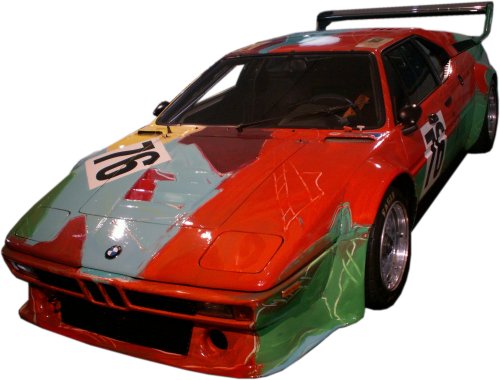
kfz-tech.de/PBM7
| In 1979 Andy Warhol painted an M1 from the Procar series and increased the value
considerably. We report about the racing version of the M1 in an extra chapter. |
|
|