Number of gears (2) Number of gears (2)
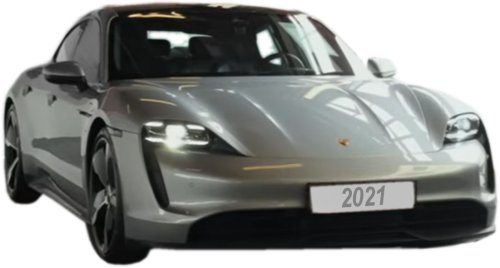
The issues surrounding recuperation are perhaps still somewhat underestimated at the moment, but perhaps not by engineers. For example, would you have known immediately that an electric car with two
motors can actually be useful for recuperation?
Or, what we're most pleased about and related to this, that recuperation on the front axle is more beneficial than on the rear axle? But perhaps we should first take things one at a time, since this is all about
the number of gears.
Basically, you can say that recuperation is limited by the maximum engine power. As mentioned in the previous chapter, this naturally depends on the temperature. Therefore, it's entirely possible that it will be
reduced during longer periods of recuperation.
You may already notice an advantage of the second engine at the front. The power is branched, the heat is distributed, so it will be recuperated longer and thus recover some of the increased fuel consumption.
The vehicle is also heavier, which provides additional benefits here.
It's long been known that there shouldn't be a permanently excited motor on the front axle—we're assuming a switchable motor there for now. The inherent permanent magnetism cannot be switched off and is
therefore harmful.
Manufacturers of front-wheel-drive-only cars with this engine don't allow towing away with this type of axle on the road. At the same time, however, it still seems to be more efficient than an electric motor
without magnets in the rotor. Therefore, almost all all-wheel-drive vehicles have this type of motor up front.
Not so with the new Mercedes CLA. A permanent magnet at the front takes over when all-wheel drive is required. And how is the magnetism problem solved? Quite simply, with a clutch that engages together
with the all-wheel drive.
There we have it. Now not only manual transmissions are making their way back into electric drive systems, but also clutches. Are we finally back where we came from? The only thing missing is that electric
cars also need regular oil changes.
Not entirely true, because in the past, many combustion engines were equipped with hydraulic transmissions and clutches, the latter also subjected to significantly greater stress when starting. This is no
longer the case, neither for the transmission nor for the clutch.
This means that everything is fully adjusted when the electric motor builds up its torque. There's no frictional difference to overcome. And the transmissions are pure gears, mechanical through and through.
Only the control system, if at all, can be hydraulically actuated.
Because efficiency is much more important here than with a combustion engine. And efficiency is much better when it's transmitted tooth-to-tooth than, for example, with hydraulics. In principle, we're returning
to a completely ordinary manual transmission.
We don't know whether the Mercedes clutch is as simply constructed as the separating clutch used to be, but we suspect it isn't. But one thing is now certain: there's certainly no going back to the oil change
intervals.
We don't know whether the Mercedes clutch is as simply constructed as the disconnect clutch used to be, but we suspect it isn't. But one thing is now certain: there's certainly no going back to the oil change
intervals.
|