Wheels - 'Tracking Axle' Wheels - 'Tracking Axle'
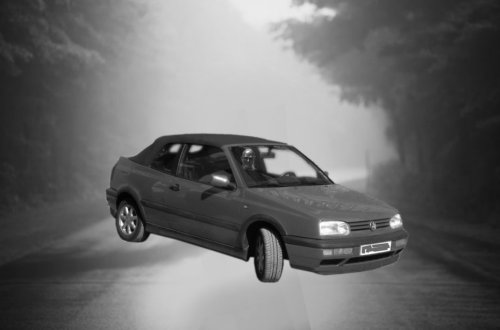
This is supposed to represent a heavily oversteering car.
The blush of anger comes to one's face when one once again has to deal with a term like the one quoted above. It just pops up, it can even be recited from earlier times. You can't even say it's not scientifically based. Maybe
someone with a doctorate or professorship substantiated it at some point.
One does not know. Actually, the term should be properly quoted so that you can read how it is defined. But we also have to beat onour own breasts and admit that we have long since given up proper citation, although we
are
concerned that we will lose a large part of our readership as a result.
Those who use the term probably don't give a damn about a definition. They use the effect of the first astonishment to free input channels from doubts almost completely. One is not completely free from such effects
oneself.
The rear axle should be stylized a bit higher. Until recently, companies did this, for example, who only offered rear-wheel drive or all-wheel drive vehicles. They literally hit the skids with the introduction of front-wheel drive.
What does it actually mean to 'guide the track'? Track is a specific direction in which the wheel would travel if it would otherwise remain unaffected. If the two wheels of an axle have different tracks, then there is either a fault
or
there is an intention behind it.
If one can't quote, then maybe one can appeal to common sense. Certainly, that too is sometimes used for fakes. So stay alert. But if you would observe a car from above, who is then guiding whom? The front axle sets a
direction with its steering angle and the rear axle has no choice but to follow it.
No, rear wheel steering and limit speed are not included. We now want to introduce the latter. However, we are still leaving it open on which axle(s) the car will be driven. It could even get into trouble when idling too fast, e.g.
in a curve when going down a hill.
Yes, weight distribution is really important. Where the car is heavier is where it is most likely to break out, always assuming the suspension does nothing to stop it and the tires are the same everywhere. With tires of the
same age and on dry roads, a different tread depth would favor those with more wear and, if it was wet, those with more tread pattern.
By 'favor' here we mean that they develop more cornering forces. And here we are at the sticking point. After all, a tire doesn't even know whether it's mounted at the front or the rear. It only has to complete a given direction
with
a certain wheel load. If this load is too great for the given static friction, then its slip angle always present in the curve will increase.
Assuming zero camber, there is only the angle between the center plane of the wheel and the true direction of movement and the wheel load. A specific distribution of the torque can undoubtedly help here, but the term
'track-
guiding rear axle' expressly wants to apply to all drive types.
So if we leave the drive aside, we actually have to describe the front axle as more guiding the track than the rear axle. But we don't do that either, because there is oversteer and understeer and you can provoke both with any
car.
|