Change Wheels Change Wheels
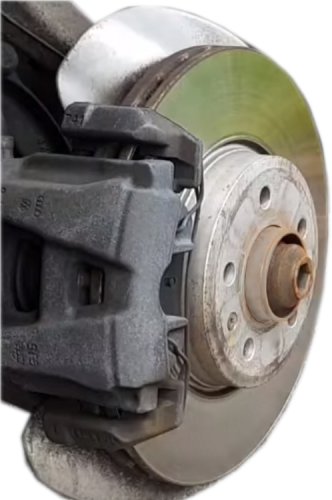
The most important thing when changing a wheel, in addition to the absolutely safe jacking up of the vehicle, is the tightening torque for the wheel bolts specified by the manufacturer. Surprisingly, the issue of corrosion is
also important here.
And how complicated that is. All areas on the wheel from which anti-corrosion agents used at higher wheel speeds, such as waxes, could get onto the brake disc are taboo. Also the threads of the wheel bolts must not come
into contact with it, and are not allowed to be lubricated either. So it is important to distribute such agents carefully on the centering seat towards the wheel bolt and not to use too much of it.
You can confidently invest the work you have saved in cleaning certain areas. This primarily refers to the contact surface towards the brake disc.
Sparkling clean would be a good term for it, as well as the of the rim from the rear. Of course, before waxing, the centering seats of the wheel bolts, but also those of the rim, were checked respectively cleaned. The latter
thanks by the fact that the unscrewed wheel does not jam on it after unscrewing.
You wouldn't believe the importance of correct centering. No matter how meticulous the balancing may have been, poor centering overshadows everything. It threatens especially when using wheel spacers. Immediately after
their assembly, if these really have to be, check that the wheels run smoothly up to motorway speed. If errors are noticed too late here, then the workshop looks for it for a long time and for a lot of money.
Of course, the ban on lubricating wheel bolts is primarily to ensure the prescribed torque. Conversely, the bolt must also be able to be turned into the thread relatively easily. This is also always done by hand even though
impact wrenches with adjustable torque are used. Always tighten bolts on flanges crosswise.
Alloy wheels are only suitable for use in winter if they are protected against corrosion with a clear varnish, for example. Contact with road salt can lead to the formation of sharp pimples in unprotected areas. When changing
from light alloy to steel rims and vice versa, ensure that the wheel bolts are of a suitable length. If there is an anti-theft bolt among them, mount it opposite the valve.
When changing a wheel, various test procedures are possible. This affects the air pressure of the spare wheel and/or the expiry date of the breakdown kit. Unfortunately, the latter can often only be used for a very limited time.
If it has been opened, a new one is due anyway. This can also be a reason for the workshop to ask a surcharge when fitting new tires. But you can also drill into the old tire in the shoulder area and let the stuff drain out.
Observe health regulations.
If you change the tires yourself, be sure to take the opportunity for a small inspection. Whether the rubber sleeves that protect the lubricated areas are still tight can be checked by visual inspection and finger contact. If the
grommets are replaced in good time, this can save costs of up to 1,000 euros at the steering, for example. If damage to the brake hoses or wheel suspension becomes visible, operational safety is perhaps even more
directly at risk.
Finally, a fairly rapid swinging of the steering system on the motorcycle (shimmy) should be mentioned (picture at the top). It occurs strongly when decelerating or coasting at 100 km/h to 40 km/h only weakly. In addition to
errors in air pressure or loading, wear on the steering head bearing or the front wheel fork can also be considered here.
|