Aquaplaning Aquaplaning
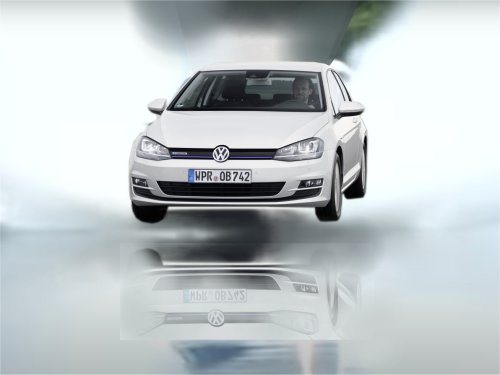
You may have been driving a car for years and never encountered this phenomenon. When you hear others report such a situation, you remain a little incredulous. And yet the fate of 'aquaplaning' can overtake you at any time.
A prerequisite, however, is sufficient water on the road.
The crazy thing is, even new tires can float if there's just enough water and you haven't or couldn't adjust your speed. Don't you believe the latter? Then take a look at certain highways with unusually tight curves. The danger is
greatest on the highway, where speeds can be quite high.
If you stick to a maximum of 100 km/h on country roads, less critical speeds below 80 km/h can be reached quite quickly. In addition, a country road is usually narrower, which facilitates rapid drainage. However, here
aquaplaning would have much more far-reaching consequences. Why? Because here the curves are even tighter and that's what it's all about.
Because one thing must be clear to you, really severe aquaplaning robs you of your brakes and steering at the same time. It is not even clear whether the car will go straight ahead from now on. I have experienced such a
case before and felt the car move a little to the left. Unfortunately, there were still curbs in front of the central guardrail, but not continuous, but with sharp indentations for the water drains.
Can you imagine what it feels to steer and nothing happens, to brake and nothing happens either. You don't wish that on your worst enemy. And don't think that I was traveling at 180 km/h. No, it must have been the normal
highway speed and I was really only able to perceive this large area of slippery water a little too late.
From a technical point of view, a water wedge forms under the wheels and because this water, as the term 'wedge' suggests, can only escape to the side, this drainage depends to a large extent on the tire width and the
width of the transverse profile towards the wheel. This has not so much to do with the contact area, which is even shorter with wider, mostly low-profile tires.
At least I slowed down and the speed of 80 km/h was something like a sound barrier for me. Controllability of the car slowly returned, just in time before a possible contact with the curbstone. The feeling of returning to this
desired state cannot be described. Anyone who has experienced this will never again (have) mounted the best tires on the rear axle.
On the contrary, he will treat himself to new tires at the front as often as possible and drive on the old ones at the rear, if necessary even disposing of them a little too early. And so you don't think that this happened to me with
particularly wide tires: It was my VW-Porsche 914/4, known for tires that were incredibly narrow for a sports car even then (155/80 SR 15). Now you can only guess that they had little tread depth. How am I supposed to refute
that after such a long time?
The proponents of the best tires on the rear axle argue that drivers are usually overwhelmed when a car oversteers. But go to youtube and watch the incredible number of dash cam videos of aquaplaning related accidents.
It is typical that the drivers first lose the steering and then their nerves, then turn the steering too much so that their car immediately loses its directional stability when the front tires regain contact with the ground. You then
usually crash head-on into some obstacle, a neighboring car or usually the crash barrier.
There are also vehicles that skid due to a lack of rear axle contact. They're usually hard to recapture, especially on wet roads. The consequences are circular movements of the car until, for example, the rear hits something
somewhere. But isn't that more harmless for the occupants, even if the car overturns? So even here you can't agree with the other side.
Let's summarize: A lot of water on the road can suddenly become noticeable for a driver. The limit speed seems to be 80 km/h. If aquaplaning occurs, then e.g. snatch the steering wheel under no circumstances but if
possible leave it that way. Try carefully, yes, but always return to the original position.
|