Fiat -> Simca
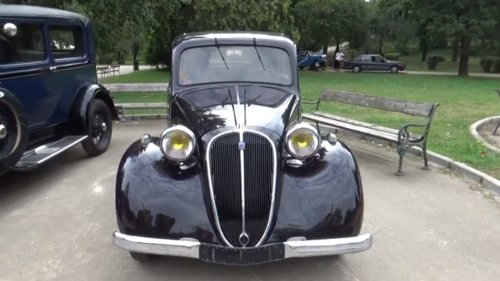
kfz-tech.de/YFi19
Simca, the younger ones among our readers probably can't do much with this car brand anymore. Perhaps only slightly older people still know France's temporarily third-largest car manufacturer after Renault and Citroën.
We still remember the Simca 1100 vividly, hardly mentioned today, after the Austin 1100 it was the second space-saving transverse engine in the compact class. Its special feature was the complex chassis, which was
previously almost unrivaled in terms of comfort.
But in principle it still shared the engine with the Simca 1000, a very similar version of all the rear-engined Fiats from 1945 onwards. And this brings us to the origins of Simca, namely the Societe Anonyme
Francaise des Automobiles Fiat.
Since 1907, Ernest Loste was Fiat's importer for France and founded this company in 1926. Allegedly, the production in France that accompanied the founding of the company was an invention in order to circumvent import
restrictions for the vehicles and to be able to sell them as domestic products.
It was not until 1932 that Fiat vehicles were supposedly equipped with parts from French suppliers in a small factory in Suresnes near Paris. It was the struggle for sales right after the Great Depression. Somehow came in
existenc 1934, the Societe Industrielle de Mecanique et de Carrosserie Aautomobile.
In contrast to SAFAF, only French people appeared among the founders of Simca. Fiat's involvement was also not discovered. The entire founding capital was apparently enough to take over the factories of the troubled
manufacturer Donnet in Nanterre.
Ultimately, the new production facilities turned out to be heavily dominated by Fiat, which meant that Lingotto's standards were reached very quickly. If you watch the video above carefully, you will spot a Fiat emblem that says
'Simca'.
Finally Fiat sold its enormous share of shares to Chrysler until 1967. So the Simca 1100 was pretty much the first product under Chrysler's aegis. Fiat had apparently made good use of the time up until then. It started in
1935 with the Ballila as Simca 6.
The numbers were based on the French tax bracket Cheval fiscal, which is essentially based on the output in horsepower. So the Fiat 500 Topolino was offered as Simca 5 from 1936 and the Ballila as
Simca 8 from 1937.
|