Front/rear wheel drive Front/rear wheel drive
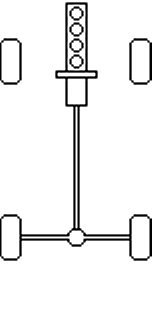
Instead of rear drive, the term 'rear-wheel drive' is used rather, as the former actually requires the engine to be close to the rear. No matter what the name is, you can hardly tell the difference between the two above-
mentioned modes of drive from the outside.
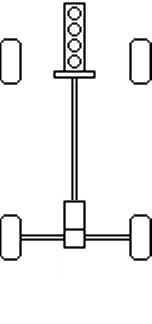
Yes, there is a possibility, namely if the wheels are wider at the back than at the front. Then it is very likely to be rear or rear-wheel drive.

And on the lifting platform? Well, it's easy because you just have to look for drive shafts on the wheels. They can be seen so clearly that even a complete covering has to be left out at this point because of the spring deflection
of the wheels.
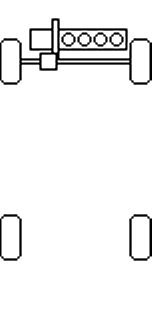
The topic is no longer as hotly debated as it used to be, although these differences still exist when it comes to electric cars. In the past, this was often a question of faith and certain drivers were almost more attached to it
than to the respective brand.
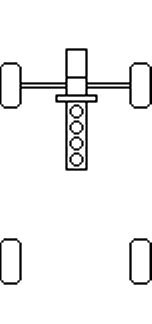
Although the physical effects are very easy to explain. Even average drivers could see in a direct comparison that only a vehicle with rear-wheel drive may have a smaller turning circle. This is also advertised for electric cars.
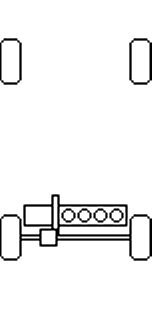
Otherwise there is little chance for this clientele. And since the electronics suppress spinning wheels, causing a lightning start doesn't help either. The supposed feeling of the drive forces in the steering often turns out to be
a myth.

Differences could most likely be identified in snowy areas, because as the gradient increases, the rear axle is loaded and the front axle is relieved. In such a case, rear-wheel drive would have to prevail in the end.

Of course, the engine at the back could be helpful, but you won't find it there except in particularly sporty cars. Front-wheel drive has become established at least well into the middle price range. In theory, it would also be
recognizable to backbenchers due to the lack of a cardan tunnel in the floor.
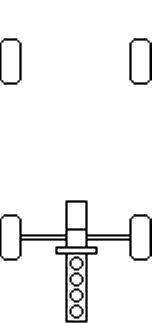
In the past, front-wheel drive cars were said to have a certain tendency to understeer and rear-wheel drive to oversteer, although this was much easier to study with rear-wheel drive. But modern chassis technology has this
largely straighten out.
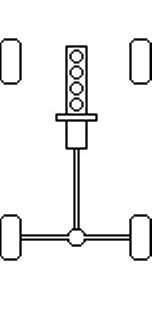
Today the motto is: 'What would you like?' Is a Golf GTI, which as we all know always has front-wheel drive, really less sporty than a correspondingly motorized BMW? And even this company, after violent 'birth pangs', has
front-wheel drive vehicles in its program.
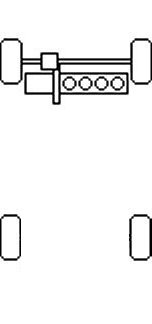
| Of course, a thoroughbred racing car would always have rear-wheel drive |
|