|
 Glas 1300/1700 GT Glas 1300/1700 GT
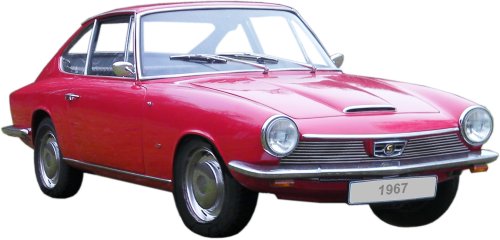
Glas 1300/1700 GT 1.290/1.682 cm3 (75/78 * 73/88), OHC, toothed belt, 108/147 Nm 3500/3000 rpm, 55/74 kW (75/100 HP) 5500 rpm, 4/5 speed, disks/drums single circle, 155 R 14,
4,05/2,32/1,55/1,35 m, tank 60 l, 900-960 kg, 170/183 km/h, 1964-19
67
It was a remarkable vehicle for the time. Almost no one thought of sports cars in this country. The Porsche 911 had just appeared, but it was in a different league and, as an entry-level 912, didn't really arouse many longings.
If already Porsche, then the right one. Who can afford that in Europe, the manufacturer also asked himself. The 1300/1700 GT combination, which cost between a good 13,000 and almost 15,000 DM as a coupé or
convertible, was mainly challenged by the Italians Fiat and Alfa.
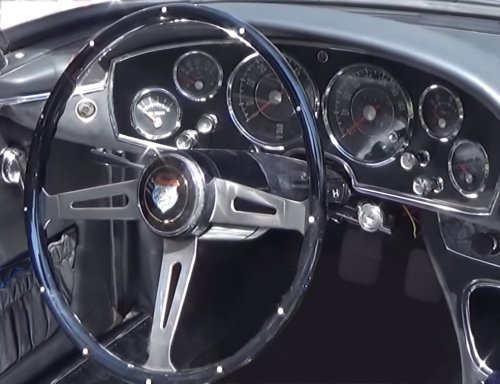
And that's the keyword, because the Glas 1300/1700 GT was also associated with Italy, more precisely the company that had an important supporter there in Pietro Frua. He not only did this wonderful design, but also made
sure that the bodies were produced, partly pressed, but also partly by hand. According to legend, you couldn't and couldn't just order a door for such a Glas and install it unchanged.
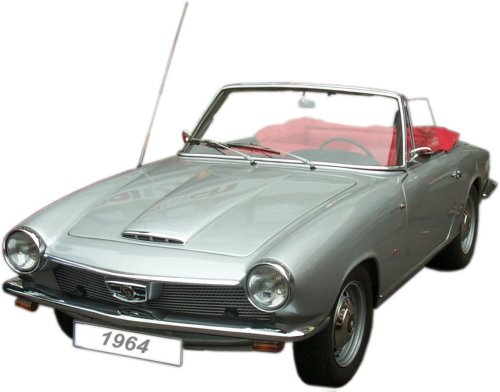
Now, what is special about the car besides the body? Well, not exactly the rigid rear axle, but that's no different with Fiat, Alfa and with the Triumph TR 4A, another competitor, at least in its first series. Compared to common
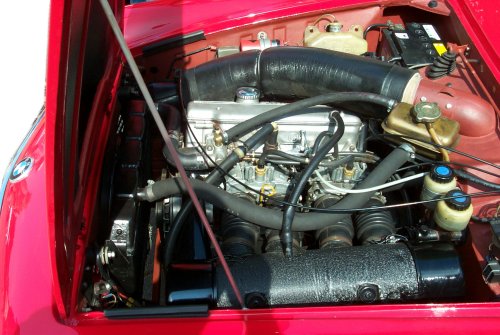
German engines, the engines with an overhead camshaft are already noticeable. Even more, by the way, thanks to the toothed belts just recently integrated into the engine construction, here still running without a cover.
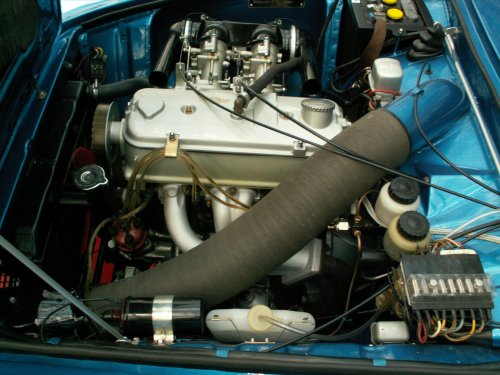
The two Solex 35 and 40 RH should also be mentioned at this point. Where they were installed as flat-flow carburetors, there were only small overflow tubes instead of float chambers. These were fed by an additional, also
mechanical fuel pump from the float chamber on the other side of the engine. So you could have taken four of the carburetors, because they were so narrow. What the two engines did was quite remarkable for their cubic
capacity. What the two engines did achieve was quite remarkable for their cubic capacity. The smaller one was even brought up to 63 kW (85 PS) at 5800 rpm in between.
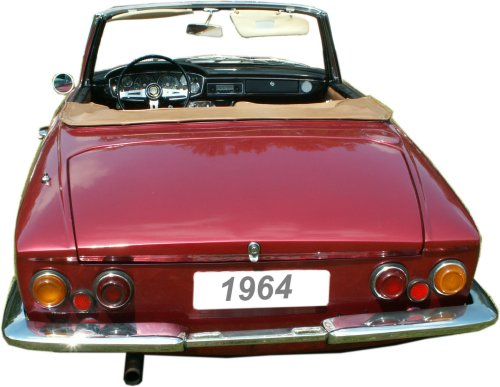
Of course, more than 5,000 cars were ordered as coupé and as convertible significantly less with around 350. Accompanied by successes in motorsport, the car should actually have been a success, but it was not always
well processed. So, the rust prevention was a weak point, an important factor at such prices. The smaller engine ran indeed, but the whole car was not really satisfactory and the 1700 a year later made the situation even
worse. In any case, the company had an image problem with this combination because of the construction of small vehicles.
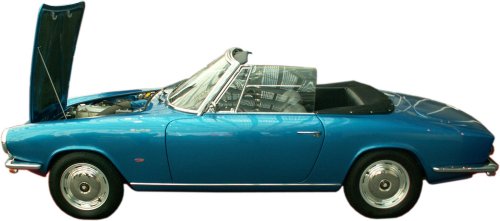
BMW 1600 GT 1.573 cm3 (84 * 71), OHC, timing chain, 131 Nm 4500 rpm, 77 kW (105 HP) 6000 rpm, 4/5 speed, disks/drums, 155 R 14, 4,05/2,32/1,55/1,35 m, tank 60 l, 970 kg, 185
km/h, 1968
The circumstances of the takeover by BMW are described elsewhere in this book. In any case, the Glas GT enjoyed the grace of being produced for another year. Why only so briefly? Presumably it was too expensive at
another DM 1,000 above the previous maximum price, or the Italian design did not really fit the modern, but really rather Teutonic line of BMW. It is believed that the supply contracts entered into by Glas still had to be fulfilled.
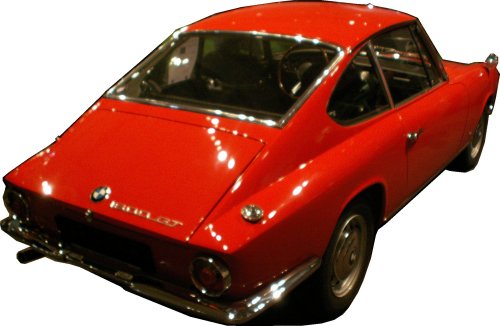
Thereby, the new owner had made definitely efforts. At the front there was now a 1600 engine with two double carburetors. The possible 4 or 5 gears were also retained as a BMW transmission. Instead of a 6V system, there
was now a 12V system, also quite a lot of effort. It affected most the rear axle, which had to give way to the usual one of BMW with semi-trailing arms. Less skill was shown with the BMW kidneys, which did not want to fit
properly in height at the front, the round rear lights of the 02 series and the tank filler neck far back instead of the more elegant fuel filler flap.
|
|