Future?
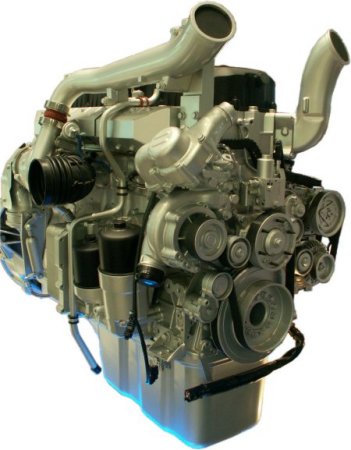
How long does it have left, given the ever-increasing advances in electric technology? Will it even still be needed once either the battery ranges or the number of charging stations have reached a level
acceptable to most people? Will it, for example, survive its 150th year of existence, assuming that the compact engines from Benz and Daimler were the pioneers of internal combustion engine mobility?
One can look a little more optimistically into the future of the combustion engine. Assuming, for example, an annual production of 10 million vehicles and a global stock of 250 million, the replacement would
take at least 25 years. However, since not all manufacturers will be successful with electric vehicles on the market at the same time, it will take longer.
Furthermore, there are niches that electric cars will simply not penetrate, just as there are niches for certain older combustion-engine cars. There are the expensive (sports) cars whose value makes even
extensive repairs worthwhile. Or the durable ones that start relatively smoothly even after 30 years of inactivity. There are (poor) countries where almost nothing that makes a sound is thrown away. Just look at
Cuba, where hardly a new car has been able to reach in 50 years.
In Germany, a car can achieve a special status after 30 years, which not only grants tax breaks but also suspends regulations against excessive emissions. Who, as a politician, would dare to override such
regulations and devalue the work of many, not just hobby mechanics, with the stroke of a pen?
And then there are those that are particularly important to the economy, those that haul heavy loads over long distances. These will still not be replaced, or only partially, by rail. Here, too, it is precisely
calculated how much the charging times of large quantities of electric batteries and legally regulated rest periods disrupt the time continuum of economical transport, just as the loading capacity of such large
quantities of batteries reduces the payload.
Moreover, the combustion engine has long since opened back doors for itself. Just think of the natural gas fleets, whose fuel can also be obtained from renewable energies. Or the vehicles that burn everything
that is inedible but nevertheless grows in the nature. Perhaps these will even survive heating with wood (or wood pallets) once the strictest limits are implemented here as well.
Anyone who once lived in a more practical, experimental era in automotive engineering will appreciate modernity. Whether this began with the first performance measurements at the beginning of the last
century or much later with high-speed cameras peering into the engine's interior is a matter of considerable debate. In any case, precise knowledge, combined with statistical data whenever possible, seems to
have advanced automotive engineering enormously.
Consider its very first twitches, for example, perched in the middle of a group of four people, surrounded by its exhaust fumes during a time of low performance when the four persons could by no means remain
comfortably seated on every climb. Then, the material-technically challenging era of increased displacement and cylinder count. After all, races were also clear competitions in terms of durability.
This was followed quite early by more than one camshaft, which was already much more intelligent because it took airflow into account. These are then artificially accelerated at some point, resulting in a huge
increase in power. The internal combustion engine breaks the 400 km/h barrier for land vehicles. Things would certainly have continued even more directly if the war hadn't put a stop to it.
In the long term, however, the misery afterwards also helped a type of engine that was invented in the previous century but only began its tentative triumphant advance after the middle of the century. This was
certainly due to the method of mixture preparation, borrowed early on from aircraft construction, which was further developed to achieve enormous pressures over the course of the rest of the century.
Today, the considerably more advanced ignition or engine and valve control, direct and/or still indirect injection, significantly accelerated air path and a whole arsenal of exhaust gas treatments are the
ingredients for what is actually still an old principle, the engine, which clearly stood out from the steam engine due to its internal combustion.
It's worth mentioning briefly that our slowly departing friend, the combustion engine, still performs its duty not only audibly in vehicles, but also imperceptibly in stationary and mobile systems. The former can
be observed in the form of a six-cylinder diesel engine in large, older air conditioning systems, but perhaps also in pumps in the desert, to which fuel can be transported but sufficient electricity is very difficult to
obtain. Think of road sweepers with a Beetle engine used solely to power the cleaning mechanism.
Given the quite possible assumption that renewable energy generation often produces surpluses and temporary storage in batteries isn't always possible, the combustion engine certainly has a chance of
competing with the fuel cell in the use of hydrogen produced in this way. Its final demise could therefore be postponed for quite some time.
|