Swarfs Swarfs
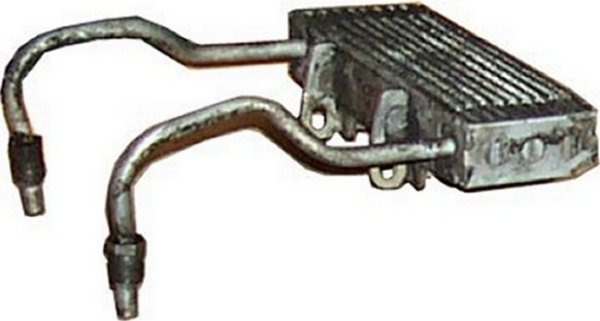
Did you know that in the past, a new crankshaft for the Citroen 2CV was only available with a new oil cooler? It was taken for granted, as it were, that the final wear of the crankshaft had caused swarfs.
However, it should be added that these early air-cooled models, including the VW Beetle, did not yet have oil filters, only a coarse strainer, which of course did not catch all the swarfs by any means. Here we also have
a crucial component, the oil filter.
We can only assume that whatever the oil filter allows through is harmless to the rest of the engine. Anyone who doesn't believe this really needs to examine everything after the damage has been done. This would then
also include dead ends from oil drillings.
No, we cannot eliminate the final risk for you with this chapter. However, those who rely on the separation of the filter, which will hopefully operate in the main stream, only need to consider how to get there.
In summary, it can be said that if there are swarfs in the engine oil, the entire route from the intake snorkel to the filter, including the oil pump and pressure relief valve, must be checked, including a visual inspection and
blowing out with reasonable pressure.
With swarfs from a defective turbocharger, it depends on the side. Only a dismantled compressor wheel causes headaches. And really heavy ones, as long as you have determined whether there is any damage either by
dismantling them or by looking inside.
An intercooler needs to be replaced anyway, the pipes are usually large, mostly smooth and easy to dismantle, so you can be sure of this afterwards. If the turbine wheel is defective, the catalytic converters and mufflers
must be inspected, but the cost is often lower.
Swarfs in the manual transmission are provisionally caught by (a) magnet(s). Car transmissions do not usually have circulation systems. Some slightly cheeky advice: keep driving until you hear something. In most cases,
you don't notice anything anyway with lifetime filling.
It is worse with the automatic transmissions. Lately, scavenging has been recommended permanently. Check online to see how often removal and opening were still necessary afterwards. After all, many parts can be
accessed without completely dismantling the system.
Yes, the Yes, scavenging. This is particularly debated in relation to air conditioning systems. Critics point out that the gentle airflow of an air conditioning service unit and the small hose cross-sections are by no means
particularly suitable for carrying swarts along with them.
They recommend rinsing with refrigerant bottles. We consider both methods to be feasible, but would strongly recommend retrofitting a filter into the air conditioning system. Then the risk of another air conditioning
compressor failure is probably averted.
Finally, a rather sad story: Once upon a time, there was a luxury car that was accidentally filled with gasoline instead of diesel fuel. No, it's not quite that tragic at this point. But unfortunately, the owner started the car and
drove off.
Not very far, but still bad, because now the swarfs had spread throughout the direct injection system. Even back then, that was enough to buy a new microcar, in order to replace pretty much all of the parts in the system.
But that's not all. The mechanic forgets to water the very sensitive high-pressure pump at the end. As you might expect, the engine start, which was much too dry this time, meant that the entire system ultimately had to be
replaced again.
|