Porsche Carrera
| Not quite in keeping with the series . . . |
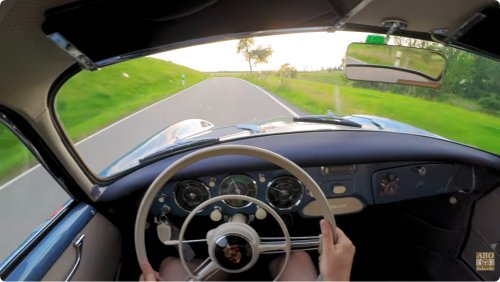
kfz-tech.de/YPo3
It's high time we took a closer look at the name 'Carrera'. It has its origins in the team's successful participation in the Carrera Americana. In Spanish, it originally meant 'road', but later it changed to 'race' or 'competition'.
But the German word for 'career' is also reflected here, meaning, for example, to be particularly successful in one's profession. Porsche certainly doesn't find this additional meaning unpleasant, as it reinforces the reasons
why one might be able to afford such a vehicle.
This designation is still used today on Porsche vehicles, though it has since become slightly more common on the rear of 911 models. At certain times, it even adorned the rear of 924 models. The
starting point for the production of series-production vehicles was October 1955.
It was the first time the Fuhrmann engine was used in the 356 A, which at the time still had a 1.5-liter displacement and produced 74 kW (100 hp). By the time the 356 B was introduced, cars equipped with this engine, in
the 1.6-liter version producing 85 kW (115 hp), were given the designation, while the two-liter version was even called the 'Carrera 2'.
Much later, the number following 'Carrera' reappeared, but this time it did not refer to the engine displacement; instead, it indicated the number of driven wheels, resulting in the models 'Carrera 2' and 'Carrera 4'. By then,
the name had already been adopted from the 911.
Initially, after its introduction, the company was very cautious about using the designation in connection with the 911. It was reserved for vehicles used in motorsports. It wasn't until the dramatic debut of the 911 Carrera
RS 2.7, as a lightweight coupe with a rear wing (ducktail) that it made its return.
Starting with the 1990 model year, the 964 was no longer limited to the top-of-the-line version bearing the 'Carrera' designation; the standard version also received this designation, simply added to the model name '911'.
Strange, because at that time, the 'Turbo' was already available alongside the 'RS'.
s
Things got even “worse” with the 996 starting in 1997, when the model name was also combined with the base engine motorization. After all, this generation already had the 'GT3'. And that is exactly what changed
again starting in the year 2000.
The Porsche 911 Carrera (992) had become significantly more powerful by then, outperforming the S version and even the Turbo from the 1980s. It's called the 'Carrera S', featuring more powerful brakes and often
the Performance Package as standard.
There was also a Carrera 4 or 4S with additional front-wheel drive, and even the Carrera Touring, which was more lightweight and less equipped but had a sportier design. And then there was the Carrera
GTS, which finally delivered more power and a half-race car.

Vehicles bearing the 'Carrera' name are classified differently today. They symbolize everyday life and, at the same time, a certain sportiness, but one that doesn't compromise practicality, in other words, a
'normal' Porsche for the road and long-distance travel.
Then there's the Turbo. It stands for maximum performance. Here, the performance of a 'supercar' is combined with practicality for everyday use. Twin-turbocharging and all-wheel drive come standard, and torque is
already very high right from a standstill.
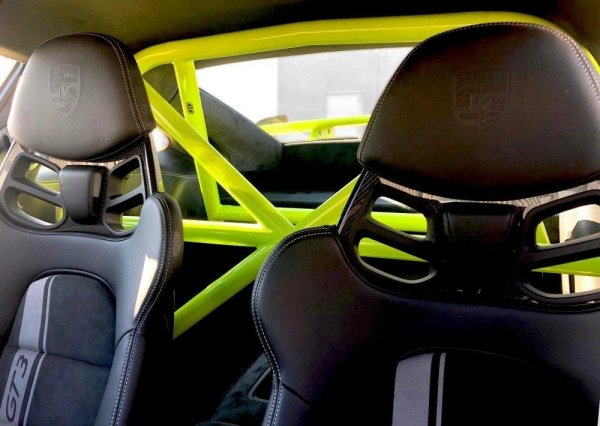
The GT3, on the other hand, is completely different. Comfort has clearly been sacrificed here, it's a 'race car for the road#. The decision was made to forego turbocharging for maximum power, opting instead for a high-
revving naturally aspirated engine. Lightweight construction, aerodynamics, and cornering performance are required.
|