|
| 
|

1962 Porsche 356 Carrera 2
Flat four cylinder, displacement (bore * stroke), 1.966 cm3 (92,0 mm * 74,0 mm), compression ratio, 9,5 : 1, ohv, blower cooling, 2 twin carburetors,
torque, 162 at 4.600 rpm, 96 kW (130 HP) at 6.200 rpm, rear engine, rear drive, manual four-speed, wheelbase 2.100 mm, turning circle 11,0 m,
front suspension: crank handle, torsion bar spring, telescopic damper, rear suspension: pivot axis, torsion bar springs, telescopic damper, disk brakes f/r,
spindle steering, wheels, 5.60 - 15, length 4.010 mm, width 1.664 mm, height 1.308 mm, cW value 0,34, tank capacity 52,5 liters, kerb weight 950 kg + driver, 210
km/h, 1962 - 1965.
The 356 Carrera 2 is one of the most fascinating and rarest Porsches ever made. It is believed that only slightly more than thirty of the 356 C convertibles were ever built, while there are about 100 coupes. The
Carrera 2 was also available as a 356 B.
For example, the Carrera 2 was roughly twice as expensive as a standard 356 in the U.S. Even when the 911 was introduced in 1964, there was still a significant price difference between the two. We've already
discussed the unique features of the Fuhrmann engine.
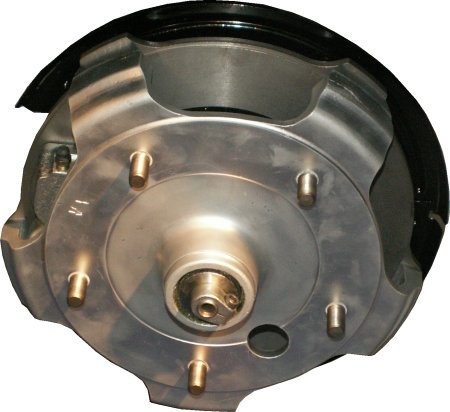
The Carrera 2's first disc brakes, developed in collaboration with ATE, are particularly rare. They looked as if they had been developed from drum brakes and had calipers that gripped from the inside.
Porsche stated that this allowed them to use brake discs with an exceptionally large diameter. However, the design appears to have increased the unsprung masses. Later, the Carrera 2, as the 356 C, was
equipped with four 'standard' disc brakes.
Compared to the first 911, it has nevertheless remained a completely different car, despite having the same displacement and performance. It represents the technical highlight of the 356 series, having reached
the end of its development cycle, in contrast to the 911, which is only at the beginning of its own.
| Performance figures that were impressive for their time. |
The performance figures achieved with the 356 are impressive, but they come at a certain cost. ChatGPT says the engine was so complicated that many repair shops were reluctant to work on it. Its
maintenance costs were legendary.
The Carrera 2 was significantly more lightweight than the six-cylinder 911, rather narrow, always featuring fenders that were a bit too large, especially at the front; it had direct steering and felt rather
'mechanical', like a street-legal race car.
The 911 was different, if only because of its engine. Six cylinders and seven main bearings promised a powerful future. It was bigger, more comfortable, and had more space. In short, it had a much more
modern look.
However, for a long time, customers didn't exactly stick with the Carrera 2, but they did stick with the 356 C. Porsche felt compelled to introduce the 912 for customers who were still calling for the old 356
engine with 66 kW (90 hp) at a significantly lower price.
|
|