|
| 
|
 911 - 1969 911 - 1969
911 T/E/S B-6, 1991 cm3, 80,0 mm * 66,0 mm, crankshaft 8-bearing, 8,6/9,1/9,9:1, Weber carburetor/mechanical fuel injection, HKZ-ignition, OHC, rocker arm,
radial fan, dry sump, 8 liters, coil ignition, 157/175/181m 4200/4500/5200 rpm, 81/103/125 kW (110/140/170 HP) at 5.800/6.500/6.800 rpm, rear engine, rear drive, limited slip differential (optional), manual-
five-speed, semi-automatic 4-speed transmission (optional), wheelbase 2.268 m, McPherson, semi-trailing arm, torsion bar springs, anti-roll bars (911 S), gear rack, safety steering column, (ventilated) disk-brake,
parking brake drums in rear disks, self-supporting body, length 4,163 m, width1,61 m, height 1,32 m, 4,5/5,5/5,5 inches rims, 61,5 liters, 1.020/1.020/1.080 kg + driver, 200/215/225 km/h, model year
1969, from19.500/21.645/27.000 DM.
First, a brief note: starting with the 1969 model year, the series was referred to as the B-Series. But with a Porsche, it's the engine that really matters, and there have been some significant changes there. There were 911s
with gasoline fuel injection.
Only the 911 T still had a carburetor, and the 911 L was replaced by the 911 E. Thanks to slightly different fuel injection systems, both models, including the 911 S, gained 7.4 kW (10 HP). However, it was
a Bosch mechanical fuel injection system.
The correct designation was “Mechanical Dual-Row Gasoline Fuel Injection Pump (MFI),” not the single-row fuel injection pump that had been known up to that point, shown at the top of the picture with a timing belt drive
from the left camshaft.
As usual, there were six pump units. A 3D cam (spatial cam) was rotated by a certain number of degrees by the accelerator pedal, thereby regulating the injection volume evenly across all six pump elements. The throttle
valves had to be moved in sync with this.
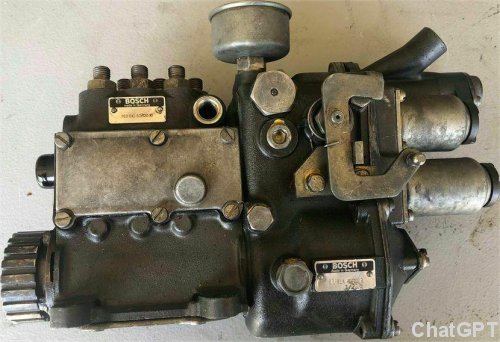
In addition, a centrifugal governor shifted the cam axially, thereby varying the injection volume depending on the engine speed. It did not do that linear, the contour was adapted to the engine's needs in every RPM
range.
| This is an early characteristic curve generated by mechanical means. |
Other changes also made this model year interesting. It is said that, outwardly, it remained a 911 of the A-series, perhaps with the exception of more bulging fenders due to wider tires and a longer wheelbase (+57 mm)
while maintaining the same overall length.
Technically, the displacement remaind at two liters, but gasoline injection is forcing a reorganization of the engine lineup. At the same time, the use of die-cast magnesium for the inner casing made it lighter, which,
combined with the forward-shifted center of gravity, represented a step forward in chassis engineering.
One battery became two with a more powerful generator (770 W), which could be placed in the front corners. The wheels, which had grown to 5.5 inches in 1968, were now 6 inches. Self-leveling hydropneumatic struts
were standard equipment; on the T model, they were optional.
| Those were just the most important changes . . . |
|
|