|
 Mathematics - Generally 1 Mathematics - Generally 1
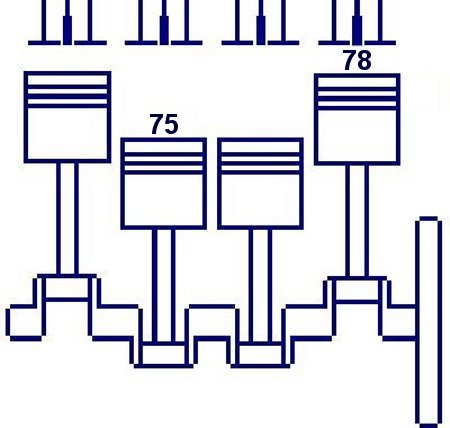
We calculate with engine data . . .
Bore = 77 mm; stroke = 75 mm; z = 4; VH = 1,396 cm3
You are simply faster if you go straight on, no decimal points, but typing everything twice and compares the results. Later, we will learn a better review of the calculation:

77 * 77 * 785 * 75 * 4 = 1.396.279,5
It is a fact that such an engine with four cylinders does not have 0.13 cm3. Could it have 13,000 cm3?
That would be 13 liters displacement. But a truck engine with four cylinders does not have that much space. In addition, it is more a petrol engine than a diesel, because its bore is larger than its stroke.
Nominal speed = 5.800 rpm; averaged internal pressure = 10 bar; internal power = 67,47 kW
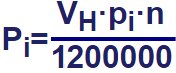
1.396 * 5.800 * 10 : 1.200.000 = 67,4733333333333
You could omit even the zeros and the '10', the result would remain the same except the decimal points.
Because the engine will have no power of 6.7 or 674 kW, right?
Mechanical efficency = 0,75; effective performance = 50.6 kW (68.8 PS)
Max. torque at 3000 rpm; effective performance at this operation range = 30 kW
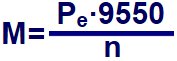
30 * 9,550 : 3,000 = 95.5
Here we want to better test the result instead of typing everything twice:
95.5 * 3,000 : 9,550 = 30
If you return to the original value, your result was fine.
|
|