Air conditioning - pressure switch Air conditioning - pressure switch
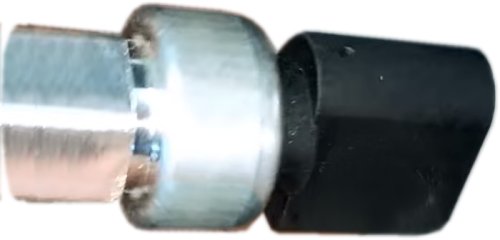
We've long since decided that you shouldn't do anything with an air conditioner yourself, unless you have a workshop with the appropriate service unit (new: €2500-5000). Tips for do-it-yourselfers, e.g. changing a piece of air
conditioning pipe yourself, are therefore incomprehensible. What's the point of that if you have to go to the workshop before and after?
And then another one that has to be judged much more critically: You should save money and fill the air conditioning system with LPG, for little more than one euro. After all, it is pointed out that it is illegal. Luckily, it's also
almost impossible, because which workshop foreman/woman would release his/her expensive service machine for conversion to LPG? And one more objection. Each refrigerant has its own oil, but just which one fits the
one suggested here? Typical of such tips, save a few bucks and then ruin the compressor.
We have a totally legal and doable way for you here. There are sensors on the air conditioning system that can be replaced without refrigerant escaping into the environment. If you unscrew one of them, a valve in the line
closes. To be on the safe side, you should check this again when unscrewing.
If the part is installed in the high-pressure area, i.e. between the compressor and the expansion valve, and the pressure there rises above 26 to 33 bar (information from Hella/Behr), then it sets the compressor clutch to
'disengaging'. A pressure switch in the low-pressure range reacts in the same way to a pressure falling below 2 bar.
| In an intact system, all of these switches are closed. |
You can therefore easily check from the outside whether a defect in the area of the pressure sensors is possible. So if only the belt pulley is running, but not the compressor, then there could be such a fault, and of course
others as well.
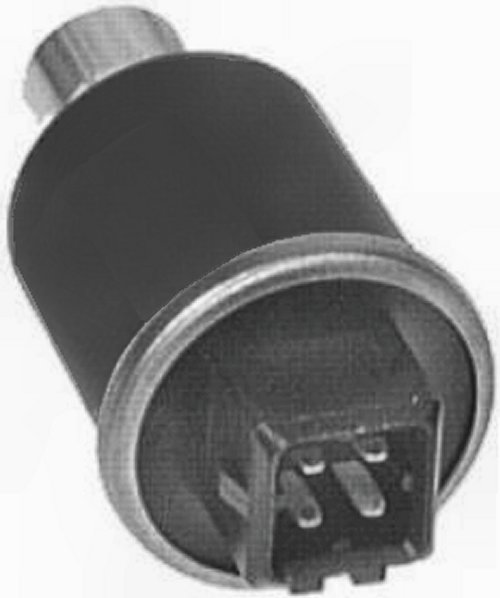
Instead of high and low pressure switches, there is the so-called 'trinary switch'. It contains their functions and adds another one, namely a switching contact for the fan at the condenser.

Of course, such do-it-yourself tests require a system that has been filled in accordance with the regulations, which then ties you after all to a workshop. Unless this service was carried out not too long ago and the visual
inspection and leakage test required for almost every functional failure does not produce any negative results.
The question of replacing the dryer is not easy to answer, as this is required by the manufacturer of air conditioning systems, e.g. Behr/Hella, together with the every two-year change of the refrigerant. But on the other hand,
workshop chains specializing in air conditioning systems sometimes do not carry it out then.
How to proceed in the case of VW if the maintenance of the air conditioning system is not mandatory?
We tested it, read in chapter 'Service 5'. |
In general, the exchange should be carried out in case the system has been 'open'. However, the question is whether this is also the case for the connection at the maintenance device. The consequence of a dryer that is no
longer working correctly is an impairment of the function of the system and, associated with this, there is a risk of repairing or replacing the expansion valve.
|