Shooting Brake Shooting Brake
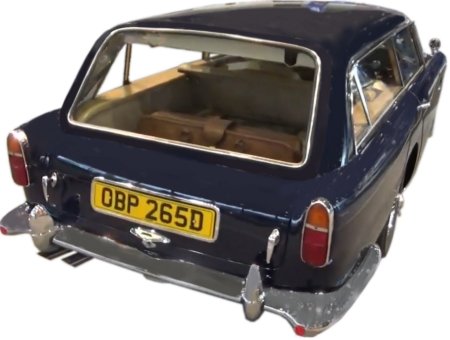
Looks more like a station wagon, right? But it is said to be one of the fathers of the shooting brake, this Aston Martin DB 5 from 1966, which was photographed at the Bremen Classic Motorshow. No, of course this is not
the
production model, but one emmerged from a small series made specially for David Brown. Due to its originally intended use, for example for hunting equipment. The sub-term 'shooting' probably arose from this usage.
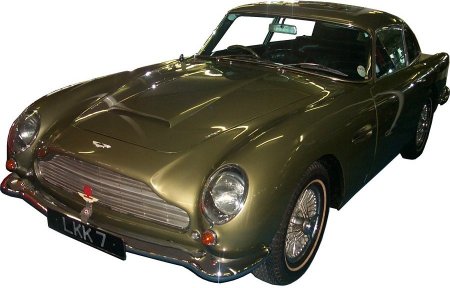
You may already know: This is the basic type of vehicle that Sean Connery uses to escape with the ejector seat in Goldfinger, to name just one example of the numerous scenes in this film. And then as a station wagon?
You
had to give it a slightly different name. Today 'shooting brake' is also designated with 'station wagon'.
This becomes clearer when you write 'shooting break', which is closer to 'break' than 'brake'. As is well known, station wagons have always been called 'Break' in France and England. But that meant more of a hatchback,
because that's the only thing that can really break off, i.e. leave a lot of air vortexes behind it.
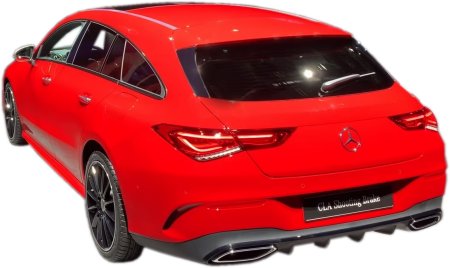
But if you look at the latest addition to the Mercedes family, it probably transports less shooting equipment and it doesn't have a particularly breakup rear either. Incidentally, for a long time the station wagon was considered
to have better aerodynamic properties, but in the CLA from Mercedes the coupé with a cW value of 0.23 is clearly better than the shooting brake with 0.26.
Which would bring us to the keyword 'coupe'. A shooting brake is developed from this, not like a station wagon from a limousine. It also has this in common with the original model at the top. If the sedan and coupe are not
the same height, as is the case with the A-Class, the lower height is chosen for the Shooting Brake. The roof line then withstands the inclination for a little longer, before finally ending with a fairly flat, large tailgate.
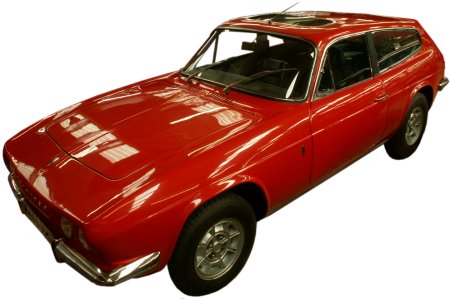
Maintaining the shape of the roof is actually the only difference to a fastback coupe with a large tailgate. In the picture above you can see the first production car of this type, the Reliant Scimitar. In the 1965 generation it was
still designed as a 2+2 coupé, but from 1968 onwards it mutated into this shape, in which the tailgate practically only consisted of a framed pane.
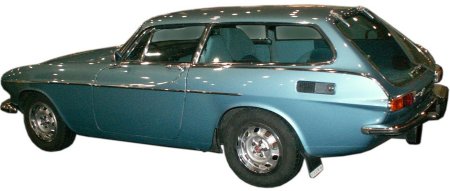
This is reminiscent of the so-called 'Snow White's coffin', one of the most beautiful pet names that people knew how to give in the car world. So the basic model is a Volvo P 1800 from 1960, which was supposed to be
changed with as little effort as possible due to its long construction period. This is how this attractive shape was created in 1969, also with a complete glass pane as a tailgate.
So one is not completely free from the constraints of having to design a shooting brake. At Mercedes, the reason was to keep the entry-level model of the A-Class affordable. A notchback sedan, required by the
requirements
of the Chinese market, was also added, and the price could not be calculated as high as desired. The station wagon derived from this would always have been compared in terms of price, i.e. it would have ended up in
similar price ranges. This is how the idea came about to create a new class with the CLA, as was previously the case with the E-Class.
Although the vehicles look the same in the interior right up to behind the B-pillar, they are a few thousand euros more expensive as coupés and shooting brakes. You can also deprive them of the cheapest engines and
make them a little sportier. Customers are obviously happy to pay for it because they prefer vehicles that stand out from the crowd.
|